



LAKE WORTH BEACH, Fla. —
October is Filipino American History Month, commemorating the first recorded arrival of Filipinos in what is now the continental United States, when they landed in California on Oct. 18, 1587. More than 430 years later, South Florida’s Filipino community is celebrating its culture, traditions and food with a unique tradition: the boodle fight.
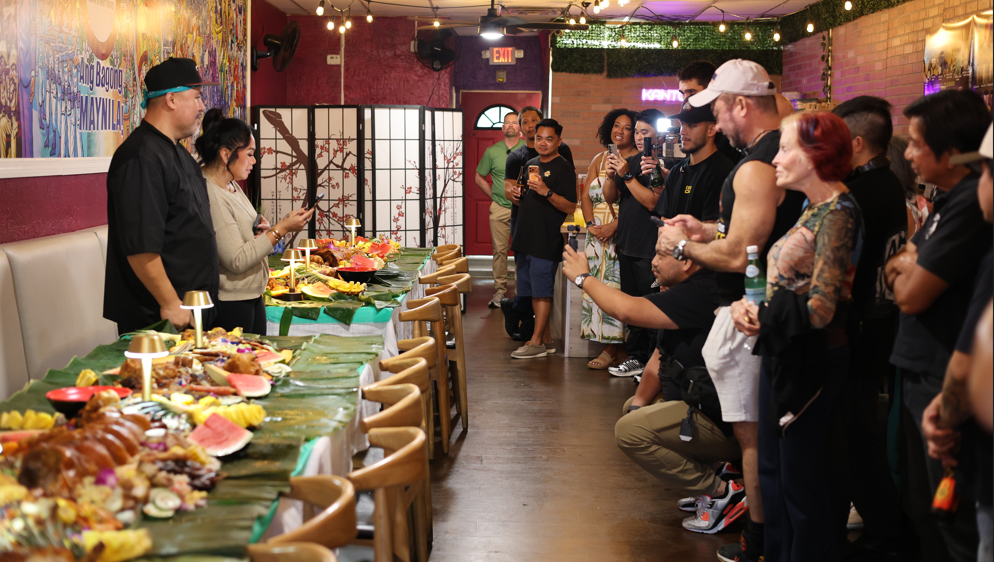
The boodle fight is a communal feast with no plates, no silverware and no formality — just piles of food stretched across banana leaves and plenty of hungry hands ready to dig in.
“The way you eat it is you grab your portion with the rice and the dish, and with your thumb, you will push it through your mouth and not touch your mouth. So, it’s just pushing. Yeah, yeah, it’s a technique,” said Darren Mendoza, owner and chef of Kanto Asian Street Food.
Your dominant hand does the eating, while your other hand stays clean for tasks like grabbing your drink. The table is divided into sections, with the food in front of you being yours to enjoy.
“It’s like different types of food, usually grilled, fried fruits, lechon. Especially if you have lechon, like right now we have lechon, and mostly grilled barbecue and rice in the middle,” Mendoza said.
For Filipino Americans, the feast is about more than food.
“I grew up here in the U.S., so eating with your hands isn’t common. But I do it because I want to keep in touch with my Filipino roots. And when you do it with other Filipinos, it’s a way to just enjoy our Filipino culture and traditions together,” said Mark Dean, organizer of SoFlo Filipinos.
Dean helps bring South Florida’s Filipino community together through SoFlo Filipinos, organizing events that keep traditions like the boodle fight alive.
“It’s originated in PMA, which is a Philippine Military Academy. And, for camaraderie purposes, they do this, so there’s no rank. It’s all together just to have fun,” Mendoza said.
Eating with your hands, known as kamayan, dates back to precolonial times in the Philippines. The military-style boodle fight added a practical twist — no plates or silverware to carry, just food piled on banana leaves and soldiers side by side.
At the time of its origins, the “fight” came from everyone reaching for a limited supply of food at once. With no individual plates, each bite was fair game, adding a little friendly competition to the feast.
Decades later, that same spirit lives on — only now a little more relaxed and with a lot more lechon.
For those gathered around the table, the boodle fight is not just a meal; it’s a way to pass down a tradition, share a culture and make sure there is always a place for someone at the table.
Stay up to date: The latest headlines and weather from WPBF 25
Get the latest news updates with the WPBF 25 News app. You can download it here.