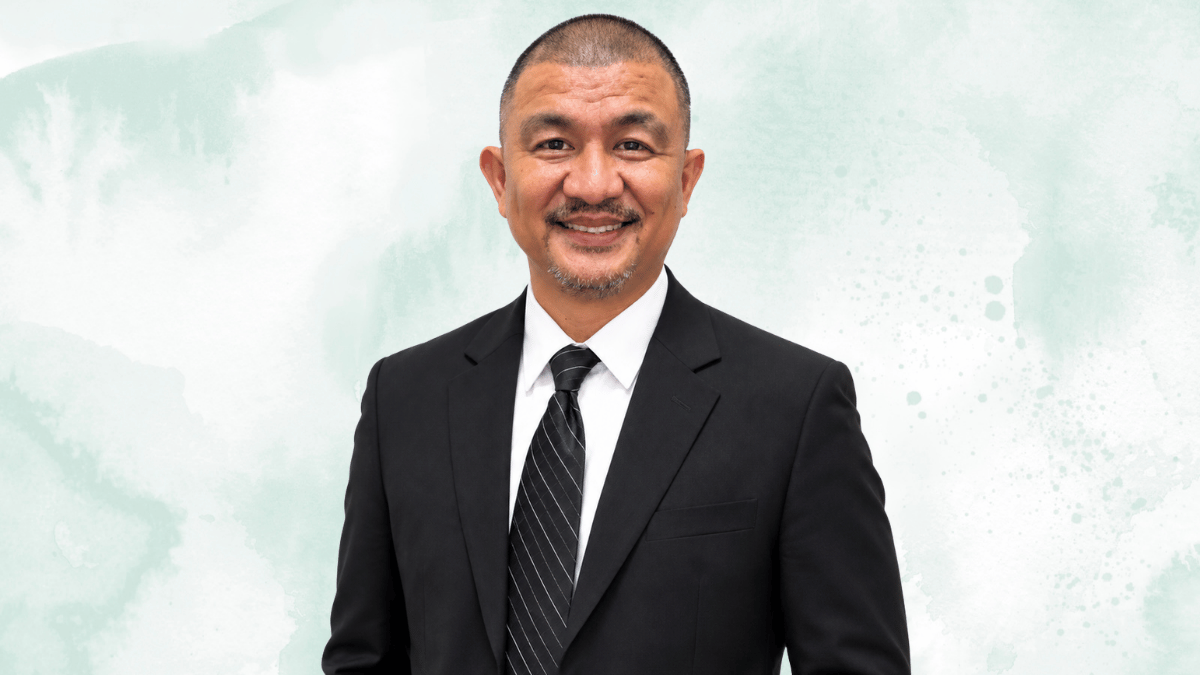



A teacher’s best work rarely shows itself on the day it’s done. It turns up years later, without warning, when a college student or a young professional walks back into a middle school in Queens and asks for one particular math teacher. For Ramil Buenaventura, those visits have become the truest measure of a career that has crossed an ocean and now runs past three decades.

“No certificate, trophy, or professional recognition can quite compare to hearing a former student tell you that you made a difference in their life,” says the 57-year-old educator, who teaches middle school mathematics at The Renaissance Charter School in Queens, New York City.
That’s a striking thing to hear from a man who has collected plenty of certificates and trophies. In 2014, the New York City Department of Education gave him a Big Apple Award, a citywide honor for public school teachers who inspire students and lift their school communities. By his account, he was the only Filipino among that year’s honorees, chosen from a teaching force of tens of thousands. That same year, the New York Daily News named him one of its Hometown Heroes, its annual tribute to people making a difference in the city. In 2021, The Outstanding Filipinos in America (TOFA) Awards honored him in education. In 2024, he appeared in “We Give the World Our Best,” a Philippine government campaign on the achievements of Overseas Filipino Workers. In 2025, Franklin Covey featured him in its Circle of Influence.


Ramil is grateful for every one of them. He’s also clear about where they rank.
“These recognitions are milestones that I deeply appreciate, but I consider my greatest achievement to be the opportunity to make a difference in the lives of students and fellow educators,” he shares with TGFM.
The honors came later. First came the years when he wasn’t sure he would last.
A good life, and numbers that didn’t add up
Before New York, there was La Salle Green Hills in Mandaluyong City. Ramil started teaching mathematics there in 1991 and stayed 13 years. He remembers them as some of the most fulfilling years of his working life. The school was well regarded, his colleagues were dedicated, and the students pushed him to improve. The school named him Model Teacher for several years running.
His work there went well beyond the classroom. On weekends, he volunteered at the school’s Kuya Drop-In Center, which offered lessons and learning support to underprivileged children, including children living on the streets. He also volunteered in the formation programs for school employees, which carried the values, spirituality, and mission of the Lasallian community. In his last two years at the school, he was Assistant Principal for Student Affairs in the Elementary Department. The job moved him from teaching into student development and administration, and gave him a first taste of leadership.
“My 13 years at La Salle Green Hills provided a strong foundation for my career,” the former Lasallian educator says. “It developed not only my skills as a mathematics teacher but also my appreciation for leadership, community involvement, and the responsibility of helping shape young people’s character.”
He wasn’t unhappy, and his reason for leaving runs against the usual story. He wasn’t fleeing a bad job or a low salary. “I was happy with my profession, and at that time, my salary was relatively competitive compared to what most teachers were earning,” Ramil says.
What changed the picture was fatherhood. “However, life took on a different perspective when I started my own family,” he says.
With two children to raise, the math teacher began running the numbers on his family’s future, and they didn’t work out. He was doing well by the standards of his profession, but a home, a car, and real financial security for his children still looked out of reach on his income. For a man who had built his life around teaching, it was hard to accept that the career he loved couldn’t give his family the life he wanted for them.
“It was not an easy decision to leave a career and a community that I genuinely loved,” he says. “But as a husband and father, I felt that I needed to explore opportunities beyond the Philippines.”
The opening came through a recruitment agency that placed Filipino teachers in American schools under the H-1B visa program. New York City was struggling with a growing teacher shortage, and its Department of Education was looking abroad for help. In 2003, Ramil joined what he describes as the first batch of 169 Filipino teachers recruited from the Philippines by the city’s school system.
“I took that leap of faith, which eventually opened the doors to permanent residency and, later, American citizenship,” the Filipino-American teacher says.
More than two decades later, he’s careful about how he describes that choice. He thinks of it less as leaving than as carrying on somewhere else.

“I did not leave the Philippines because I stopped loving what I was doing,” Ramil says. “I left because I wanted to give my family more opportunities while continuing to pursue the profession I was passionate about. It was a decision rooted in sacrifice, hope, and a parent’s desire to build a better future for the next generation.”
The sacrifice started before he got on the plane. To cover the agency fees, airfare, and temporary housing, he had to borrow money, and it took him about a year to pay it all back. The fresh start was leaner than he had pictured.
“Starting a new life in a foreign country was not as financially comfortable as I had initially imagined,” he says.
The money turned out to be the smaller problem.
Three years of proving himself again
The school system sent Ramil to a low-performing school in a low-income neighborhood. Its future was in doubt: unless student achievement and overall performance improved significantly, it faced possible closure. Many of his students were dealing with academic, social, and economic difficulties at the same time.
“It was undoubtedly one of the most challenging teaching environments I had ever experienced,” the veteran educator says.
He was also alone in a way he hadn’t been at La Salle Green Hills. He was the only Filipino teacher at the school, and the students and the surrounding community came from a very different culture. The man who had been a Model Teacher and an assistant principal in Manila was now, to his students, simply the new teacher who talked differently.
“I experienced discrimination and disrespect because of my accent, cultural differences, and teaching approaches,” Ramil says. “Some students laughed at the way I spoke, questioned my authority, and made fun of my teaching strategies.”
He often didn’t get the support he needed from parents or administrators, which made it harder to build relationships with the students. The hostility in the room started to follow him home.
“Students’ disrespectful language and behavior sometimes intimidated me,” the math teacher admits. “There were even days when I felt afraid to go to school. I questioned myself and wondered whether I had made the right decision in leaving the Philippines.”
It went on for about three years. He calls them emotionally exhausting, a sustained test of his confidence, patience, and resilience. Going home was an option, but he never seriously considered it.
“However, I knew that I had made this sacrifice for my family, and giving up was not an option,” Ramil says.
What got him through wasn’t one breakthrough. It was the slow work of adjusting: learning how his new surroundings worked, understanding the cultural gaps between himself and his students, and getting tougher about difficult situations. He also leaned on what he already had: his training, his 13 years of experience, and one conviction he refused to give up. In his words, “every student, regardless of background or behavior, deserves a teacher who will continue to believe in them.”
Over time, things changed. Ramil grew more comfortable at the school, built better relationships with students and colleagues, and became confident teaching in a multicultural setting. The classroom that had once frightened him became the place where he learned how to teach.
When he looks back now, he doesn’t remember those years only as an ordeal. He counts them as his real start as an educator in America.
“They taught me that teaching goes beyond delivering lessons and meeting academic standards,” Ramil says. “It is also about building relationships, understanding students’ circumstances, believing in their potential, and creating opportunities for them to succeed. Those experiences helped shape the kind of teacher and mentor I am today.”
They also taught him something about migration that doesn’t make it into recruitment brochures. A better salary, he learned, comes with emotional costs that have to be paid in full.
“I learned that being an immigrant means starting over in many ways,” the Filipino educator says. “You may have to prove yourself again, earn people’s respect, and overcome obstacles that you never anticipated. But with determination and a clear purpose, you can eventually find your place and make a meaningful contribution to the community that welcomed you.”

Ramil found his place. Today he works at The Renaissance Charter School, an independently operated public charter school in New York City. He still teaches mathematics, mainly in grades six through eight, and he is also a Math Coach in the school’s Mathematics Department. In that role he helps other teachers sharpen their instruction, raise student achievement, and design lessons that stick.
The move from teaching students to coaching teachers came naturally to someone who once trained Lasallian staff in Manila. What he values most about his current school is the room it gives teachers to experiment.
“One of the things I appreciate most about working here is the professional autonomy and flexibility that teachers have in designing and implementing teaching and learning strategies,” the math coach says. That freedom, he adds, lets teachers be “creative, responsive, and innovative” in meeting students’ varied needs.
The school also pays for its teachers’ growth through training sessions, seminars, and professional development programs that have kept him current on new approaches to teaching. He gets the most out of the school’s Professional Learning Community, where teachers plan lessons together, trade ideas, study student performance data, and work out strategies as a group.
“There is a strong sense of shared mission and collaboration among teachers,” Ramil says. “I believe that when teachers learn and grow together, our students benefit the most.”
His job also goes beyond equations. As adviser to a small group of students, he has guided them through their social and emotional growth and the turbulence of adolescence. As a Student Council moderator, he encouraged students to raise their concerns, speak up for themselves, and help improve middle school discipline and the wider school climate.
“These experiences remind me that education is not limited to academic achievement,” the educator says. “It is equally important to help young people develop confidence, responsibility, leadership, and a sense of belonging.”
There’s an irony here that he doesn’t spell out. The teacher whose authority students once openly challenged now helps students learn to use their own voices responsibly.
A classroom with no walls and no retirement age
When the COVID-19 pandemic closed school buildings and moved lessons online, teachers everywhere had to start over. Ramil’s response was a YouTube channel he called Rampage Math.
“What started as a way to supplement my online mathematics instruction eventually grew into a platform that allowed me to reach students who needed additional lessons, practice exercises, and learning resources,” he says.

During a time when face-to-face teaching was limited, the channel became a lifeline for his students. Then it grew beyond math. He started using it, along with his other social media accounts, to share Filipino culture, traditions, community events, and stories about the Filipino-American experience. A pandemic workaround became a way to connect with fellow kababayans and show Filipino heritage to people who had never seen it up close.
For the math teacher, the lesson was about adapting. “We live in a world where learning and communication are no longer confined to classrooms or geographical boundaries,” Ramil says. “With the right purpose and responsible use of technology, social media can become a powerful tool for education, cultural preservation, and community building.”
He’s especially proud that the channel now does several jobs at once: it teaches math, shares knowledge, entertains, promotes Filipino identity, and connects communities. “Ultimately, I believe that our influence as educators should not be limited to the students assigned to our classrooms,” he says. “Rampage Math is one of my ways of doing just that.”
Still, the reach he cares about most is the kind no channel analytics can measure: students who come back. Some are in college. Others are working professionals and grown adults. They come looking for him specifically, to thank him and to tell him how his classroom, or his advice at the right moment, shaped who they became.
“Those moments are priceless,” the Queens educator says. He calls those unexpected visits his greatest non-material reward. “They are the kind of recognition that stays with you forever and continues to remind you why you chose to become a teacher in the first place.”
He chose teaching, he says, because he has always believed education can change lives. More than three decades in, he says that belief has only gotten stronger.
He’s equally candid about the material rewards of the move abroad. The higher salary, compensation, and benefits gave his family a more comfortable life and a financial security he thinks would have been harder to reach at home. A stable income and access to a credit system that allows responsible borrowing let the family buy property, a milestone he once doubted he’d reach. His children have had access to educational opportunities, including scholarships and financial aid for college, which he says has given him “tremendous satisfaction” as a parent. As he gets closer to retirement, his pension, Social Security, and Medicare give him confidence that his years of work will pay off later.
He gives the American system credit on public services too, without pretending it’s free. “Although taxes can be relatively high, I recognize the value of having systems and services that support the needs of individuals, families, and communities,” Ramil says.
What the move gave him, the father of two concludes, was “more than a better-paying job.” He doesn’t overstate it. “I am grateful for these blessings, while remaining mindful of the sacrifices that come with living far away from one’s homeland.”
That gratitude is starting to shape what comes next. Through the teachers’ union, educators who are at least 55 and have completed 25 years of service can retire early. Ramil is seriously considering it once he qualifies. For him, though, retiring doesn’t mean leaving the profession.
“For me, early retirement does not necessarily mean completely leaving the profession,” he says. He’d like to keep doing part-time work or other educational projects, just at a pace that leaves room for personal growth, for family, and for the things his job sometimes pushed aside.
He and his wife are looking forward to traveling, visiting relatives, and enjoying what they’ve worked for while they’re still young and healthy enough to see the world. They also want to give more time to the causes that already fill their weekends. The couple serve in leadership roles in their Filipino-American parish and hope to keep putting their time, talents, and resources into church activities, faith formation, and community building.
Ramil also sits on the board of the Association of Filipino American Teachers of America, where he supports Filipino educators and works to expand educational opportunities for Filipino-American students. The project he’s most attached to is Paaralan sa Konsulado, a summer program for Filipino-American students where he volunteers as a teacher.
“I believe it is important for our younger generation to learn about their Filipino heritage, culture, language, and identity while growing up in America,” he says.
As a member of the Filipino American Press Club of New York, he also supports efforts that promote responsible journalism, truth, education, and Filipino-American representation in the media. He keeps using his social media to make culture and community stories accessible, engaging, and fun, especially for younger audiences.
“I see retirement not as the end of my journey in education and public service, but as an opportunity to redirect my time and energy toward other meaningful pursuits,” the longtime teacher says. “After all, service and learning should not have a retirement age.”
Ask him what he would tell Filipinos who are struggling abroad, and he comes back to three things he learned the hard way. The first is to build a working life around your real strengths, because a job abroad should be about more than survival.
“Work should not simply be a means of earning money or surviving overseas,” Ramil says. “It should also be an opportunity to develop your abilities, discover your potential, and become a better version of yourself.”
The second is to find a community. He has seen how lonely life overseas can be, far from family and familiar places. “Do not isolate yourself,” he says, pointing fellow migrants toward a church, a civic group, or a community organization where they can find friendship and support. He doesn’t pretend those groups are perfect. There will be disagreements, misunderstandings, and personality clashes. “My advice is to focus on the group’s mission and common goals rather than becoming discouraged by individual shortcomings,” the AFTA board member says. Choose relationships carefully, he adds, and let trust build over time.
The third is pride in where you come from, along with the responsibility that comes with it. “Wherever you go, remember that you are also an ambassador of the Philippines,” Ramil says. How Filipinos speak, work, and treat other people, he believes, shapes how the world sees the country. That doesn’t require perfection, he says, only integrity, hard work, hospitality, compassion, respect, and a real effort at excellence.
Beyond those three, he offers a reminder for the bad days, which he has had his share of. There will be moments, he warns, when migrants doubt their choices or feel overwhelmed. His advice is to remember why you started, take care of your family and yourself, handle money wisely, nurture your faith and relationships, and hold on to the people and values that shaped you.
“We may build our careers and futures in another country,” the Filipino-American educator says, “but we should never lose the Filipino in us.”
It’s the same philosophy behind the line Ramil lives by, one he has carried from Manila to New York and back again in every summer class at the consulate: “What you are is God’s gift to you. What you become is your Gift to God!”
Two decades ago, he became a teacher who was laughed at, doubted, and sometimes afraid to walk into his own school. He kept going anyway. Today, some of the students who knew him then come back as adults to tell him what that meant to them.