


A Catholic priest has called for a stronger culture of care for elderly Filipinos as migration, urbanization and changing family structures leave some older people vulnerable to neglect and abandonment.
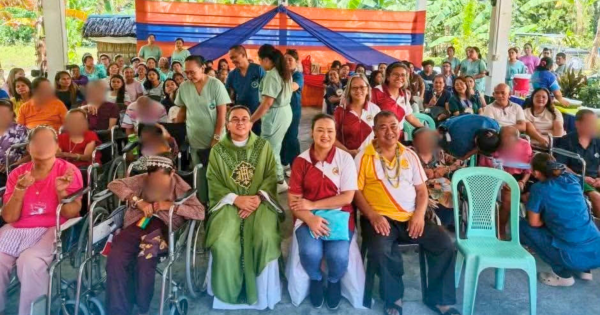
Fr. Andy Peter Lubi, director of Hapag Aruga Foundation Inc., made the appeal during the foundation’s celebration of Elderly Filipino Week on October 4 at Bahay Aruga, a home for abandoned and vulnerable senior citizens in Barangay Managpi, Calapan City, on Mindoro Island in the central Philippines.
The celebration carried the theme, “Elderly Filipinos: They Have Value and Rights, a Voice and Contribution to the Nation, A Table of Gratitude, a Heart of Compassion, a Bond of Hope.”
“We need to care for our brothers and sisters, especially those who are weak and those who need our help,” Fr. Lubi said.
Drawing on the biblical image of a vineyard in the Book of Isaiah, he compared caring for older people with cultivating a vineyard that bears fruit through patient and faithful care.
He also described elderly people as “vintage wine,” whose lives can become richer with age when they receive companionship, attention and proper care.
“As they grow older, their lives can become more meaningful and richer,” he said.
The priest noted that Filipino families are increasingly affected by migration and urbanization. Many young Filipinos work in other parts of the country or overseas, leaving elderly parents or relatives behind. Changing family structures can also increase the risk of isolation and neglect.
He urged communities to help older people live what he called a “vintage life” marked by dignity, companionship and care.
Hapag Aruga began in 2012 as an initiative to assist abandoned, neglected and indigent elderly people and was formally registered with the Philippine Securities and Exchange Commission in October 2024.
Its Bahay Aruga home currently serves 13 elderly residents, some of whom had previously depended on neighbors for food or had been left to care for themselves.
The foundation provides residential care as well as livelihood and formation activities aimed at restoring residents’ dignity and sense of self-worth. It works with government agencies, nongovernmental organizations, private donors and community groups.
The organization has two registered social workers, four caregivers and three maintenance workers and partners with the Provincial Government of Oriental Mindoro and the Calapan City Health Office.